Texas · Commercial insurance
Restaurant Insurance in Texas: The Coverages a Restaurant Owner Needs
Eight coverages, what each one pays for in a real kitchen, where the standard policies stop, and a checklist to run before you sign a lease or renew.

In short
A Texas restaurant usually needs eight coverages: property, general liability, liquor liability if it serves alcohol, business income, equipment breakdown, spoilage and food contamination, workers’ compensation, and auto coverage for delivery or catering. A standard general liability policy does not cover liquor claims, and a standard property policy does not pay for spoiled food or a failed compressor unless those coverages are added.
- General liability covers customer injuries and property damage, but a standard policy does not protect against liquor-related claims.
- Spoilage, food contamination and mechanical breakdown are optional additions, not part of a basic property form.
- Business income coverage replaces lost income only when a covered cause of loss physically damages the restaurant.
- Workers’ compensation is optional for most private Texas employers, but going without it removes key legal defenses in an injury lawsuit.
- The TABC safe harbor protects a license from administrative action in certain cases. It is not insurance and does not pay a claim.
In this article
- Which coverages does a Texas restaurant need?
- Can a restaurant buy a business owner’s policy?
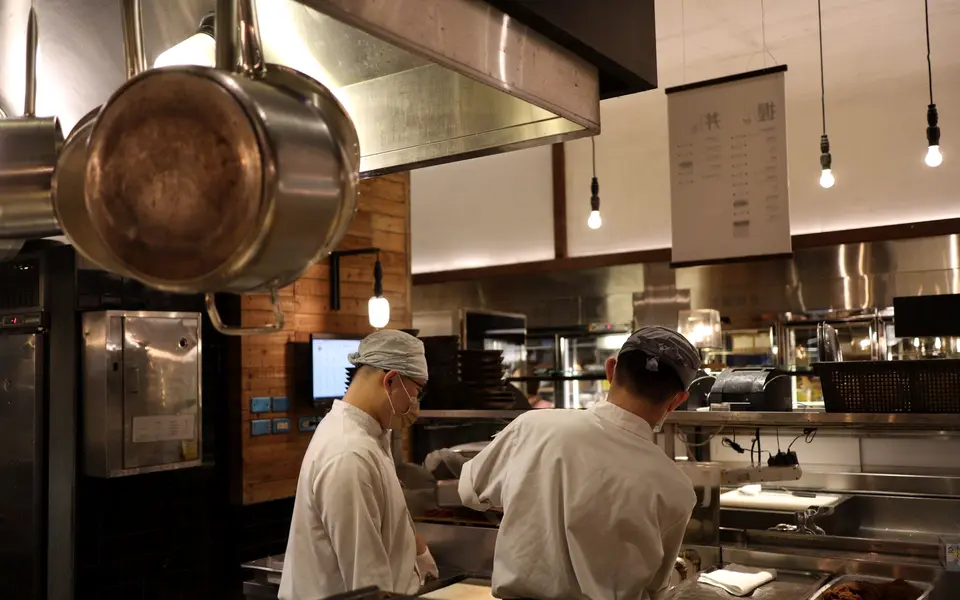
- What does the property coverage need to handle in a kitchen?
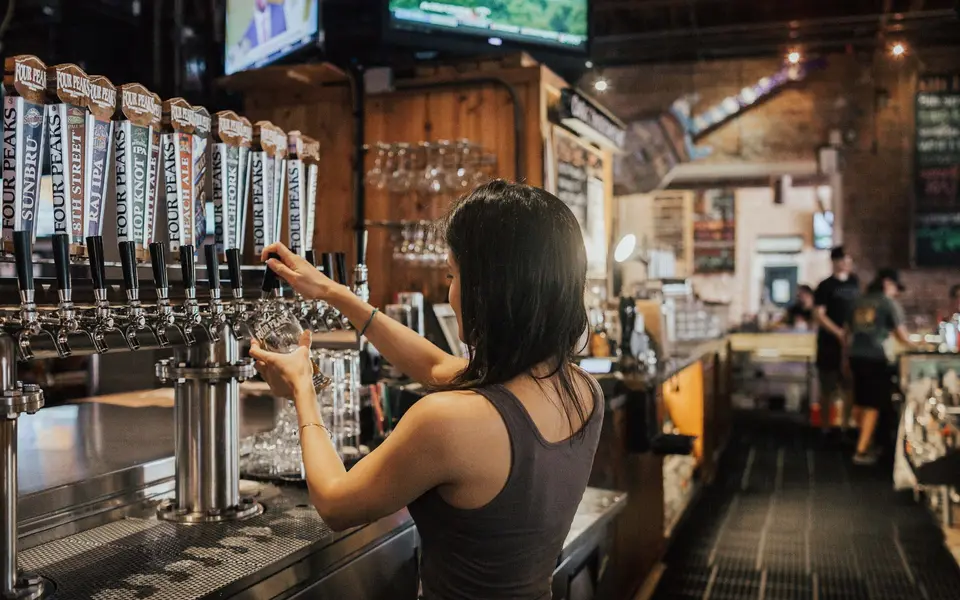
- What changes if you serve alcohol?
- Do you have to carry workers’ compensation for kitchen and floor staff?
- What about delivery, catering and food trucks?
- What happens to your income if the restaurant has to close?
- What should you check before you open or renew?
Service: Commercial Insurance in Flower Mound, Plano and Garland
A restaurant packs more ways to lose money into one room than almost any other small business: open flame, hot oil, wet floors, perishable stock, alcohol, cash and a crew working fast. No single policy covers all of that. A Texas restaurant usually needs eight coverages working together, and the gaps between them are where owners get hurt.
Which coverages does a Texas restaurant need?
Each line below is a separate coverage, even when several are sold in one package.
The core coverages for a restaurant
| Coverage | What it pays for | A restaurant example |
|---|---|---|
| Property | The building if you own it, plus equipment, furniture, improvements and stock | A grease fire damages the hood, the line and the dining room |
| General liability | Injury to customers and damage to their property, plus legal defense | A guest slips on a wet floor near the restrooms |
| Liquor liability | Injury or damage caused by an intoxicated person you served | A guest leaves after several drinks and causes a crash |
| Business income and extra expense | Lost income and continuing bills while you are closed for covered repairs | Four months closed after the fire |
| Equipment breakdown | Sudden mechanical or electrical failure of equipment | The walk-in compressor burns out |
| Spoilage and food contamination | Spoiled stock, and the cost of responding to a contamination event | A power outage ruins the cooler’s contents |
| Workers’ compensation | Medical care and part of lost wages for injured employees | A line cook is burned by fryer oil |
| Commercial auto, or hired and non-owned auto | Liability from vehicles used for the business | A driver delivering an order hits another car |
What this means for you: ask for a quote that shows each of these as its own line with its own limit. A missing line is a coverage you do not have, not one that is included somewhere else.
You may also want crime coverage for cash, cyber coverage for card payments, and an umbrella over your liability limits. Our overview of what insurance a Texas small business needs puts them in order.
Can a restaurant buy a business owner’s policy?
Sometimes. A business owner’s policy bundles property, liability and business income for small and mid-sized businesses, and it is usually cheaper than buying the parts separately. The Insurance Information Institute (Triple-I) notes that some businesses, restaurants among them, may not be eligible and may need separate policies.
Eligibility depends on each insurance company’s rules. A coffee shop or a sandwich counter may fit a package easily. A full-service restaurant with a bar and deep fryers may end up with a commercial package policy built coverage by coverage. Either way, what matters is that the eight coverages are there. Our guide to how a business owner’s policy works explains what the bundle includes and what it leaves out.
What does the property coverage need to handle in a kitchen?
The base property coverage pays to repair or replace your equipment, furniture, improvements and stock after a covered cause of loss such as fire, wind or hail. The form you choose and whether you are paid replacement cost or actual cash value make a large difference, and both are explained in our article on what commercial property insurance covers.
Restaurants need to look harder at what the base form excludes. Triple-I lists mechanical breakdown, power failure and changes in temperature or humidity among the standard exclusions. In a kitchen, those are everyday risks.
Common kitchen losses and the coverage that responds
| What happens | Base property form | What you need |
|---|---|---|
| Fire damages the cooking line | Typically covered | Property coverage with enough limit to re-buy equipment at today’s prices |
| The walk-in compressor fails | Typically excluded as mechanical breakdown | Equipment breakdown coverage |
| Food spoils after the compressor fails or the power goes out | Typically excluded | Spoilage endorsement |
| Customers get sick and the health authority closes the kitchen | Not a property loss under the base form | Food contamination endorsement |
What this means for you: three endorsements, equipment breakdown, spoilage and food contamination, cover everyday kitchen losses the base form leaves out. Check that each is on your policy and note the limit.
Triple-I describes the spoilage endorsement as covering property spoiled by a breakdown of refrigeration or humidity control equipment or by a power outage beyond your control. The food contamination endorsement covers expenses after food poisoning or disease, including advertising to restore the restaurant’s reputation.
If you rent, the lease decides who insures what. Read our article on insurance requirements in a commercial lease before you sign.
What changes if you serve alcohol?
Two things change: your liability and your policy.
On the policy side, Triple-I is direct: a standard commercial general liability policy does not protect your business against liquor-related claims. Liquor liability is added as an endorsement or bought as a separate policy. If alcohol is on the menu and liquor liability is not on your declarations page, you are uninsured for that risk.
On the legal side, Texas has a Dram Shop Act. The Supreme Court of Texas describes it as creating a claim against a provider who sells or serves alcohol to a customer when that service and the resulting intoxication cause harm. The provider can be liable only if, at the time of service, it was apparent to the provider that the customer was obviously intoxicated to the extent that he presented a clear danger to himself and others. Whether that standard is met in a given case is a question for an attorney.
Texas also has a “safe harbor” tied to server training. The Texas Alcoholic Beverage Commission (TABC) says it will not take administrative action against a license or permit when an employee sells to a minor or an intoxicated customer, if these conditions are met:
- The person selling is not an owner or officer and holds a current seller-server certificate from a TABC-approved school
- All employees who sell, serve or deliver alcohol, and their immediate managers, are certified within 30 days of their hire date
- The employer has written policies for responsible alcohol service and makes sure employees have read and understood them
- The employer does not directly or indirectly encourage employees to break the law
- There are not three or more of these violations within a 12-month period
A TABC certificate is valid for two years. The safe harbor protects your license from TABC action. It is not insurance, and it does not pay an injured person’s claim. For the full picture, read our article on liquor liability and the Texas Dram Shop Act.
Do you have to carry workers’ compensation for kitchen and floor staff?
Texas does not require most private employers to carry workers’ compensation, according to the Texas Department of Insurance (TDI). That makes it a business decision, and in a kitchen, with burns, cuts and slips, it is a serious one.
TDI explains what you give up without it. An employer with coverage is protected from most lawsuits by injured employees. An employer without coverage can be sued, and in that suit cannot argue that the employee’s own negligence, a co-worker’s negligence, or the employee’s knowing acceptance of the danger caused the injury. You must also file an annual notice with the Division of Workers’ Compensation, post notices at the workplace and tell new employees in writing that they are not covered.
Our article on workers’ compensation in Texas walks through the choice. For claims by employees that are not about injuries, see employment practices liability insurance.
What about delivery, catering and food trucks?
Vehicles are outside both the property policy and the general liability policy. How you insure them depends on who owns the vehicle.
- The restaurant owns the vehicle. A catering van or food truck needs commercial auto coverage. TDI notes that commercial auto can cover food trucks, trailers and service vehicles.
- Employees use their own cars. If a server or driver runs a delivery or a bank deposit in a personal car and causes a crash, the restaurant can be named in the claim. Hired and non-owned auto coverage is built for that.
- The driver’s own policy. A personal auto insurance policy may limit or exclude delivery use. Drivers should check their own policies.
For off-site catering, ask whether your liquor liability and property coverage follow you to the event, and expect the venue to ask for a certificate of insurance.
What happens to your income if the restaurant has to close?
When the kitchen is down, sales stop, and rent, loan payments and key staff still cost money. Business income coverage replaces the lost net income and pays continuing expenses, but only when a covered cause of loss physically damages your property. Our article on how business interruption insurance works explains the waiting period and how to set a limit.
A worked example
This is an illustration with round numbers, not a quote. A restaurant in Plano loses power for 30 hours after a spring storm knocks out service to the block. Nothing in the building is damaged. The walk-in and the reach-ins warm up, and $6,000 of meat, dairy and prepared food has to be thrown out. The restaurant also loses about $9,000 in sales over two days.
- With no spoilage endorsement: the property policy typically pays nothing. Power failure and temperature change are standard exclusions.
- With a spoilage endorsement of $10,000 and a $500 deductible: the policy would pay about $5,500 for the food.
- The lost sales: basic business income coverage would likely not respond, because the restaurant itself had no physical damage and the waiting period on a business income claim is typically 48 to 72 hours. An endorsement for interruption of utility services is what addresses lost income from an outage that starts off your premises.
What should you check before you open or renew?
Work through this list with your policy in hand. The terms are defined in our insurance glossary.
- Read the lease insurance section and list every coverage and limit it requires.
- Total your equipment and build-out at today’s replacement cost and compare it with your property limit.
- Confirm the three kitchen endorsements: equipment breakdown, spoilage and food contamination, with limits.
- Find liquor liability on the declarations page if you serve any alcohol, and compare the limit with your lease or franchise agreement.
- Check business income: the limit or number of months and the waiting period.
- Decide on workers’ compensation knowing what you give up without it.
- List every vehicle and every driver who runs errands, deliveries or catering.
- Keep TABC certificates current for everyone who sells or serves, and keep your written alcohol policies signed.
- Recheck after changes: a new patio, a bar expansion, delivery or catering all change the risk.
Our article on what drives the cost of business insurance explains what moves the price, and our commercial insurance page shows how the coverages fit together.
How Assured Insurance Group helps
Assured Insurance Group helps restaurant owners in Flower Mound, Plano, Garland and across Dallas–Fort Worth with commercial insurance. Bring your lease and your current policy, and we will walk through it with you coverage by coverage and go over your options. You can visit our Plano office, email info@assuredinsgroup.com, or request a quote. You can also call us at 214-222-5234.
Questions people ask next
Is restaurant insurance required by law in Texas?
Mostly it is required by contract, not by statute. Texas does not require most private employers to carry workers’ compensation, and the coverage a restaurant must show usually comes from its lease, your lender, your franchise agreement and vehicle financing. Those contracts usually ask for property, general liability and often liquor liability, with proof before you open.
Does general liability cover a customer who gets food poisoning?
A claim that your food made a customer sick is a bodily injury claim, which is what general liability is for, subject to the policy’s terms and exclusions. The restaurant’s own costs after an outbreak, such as replacing food, cleaning and advertising to win customers back, fall under a food contamination endorsement on the property side.
Do I need liquor liability if we only serve beer and wine?
Yes, if you sell or serve any alcohol. A standard general liability policy does not protect a business against liquor-related claims, whether the drink was a beer or a cocktail. Coverage is added as an endorsement or bought as a separate policy, and many leases and franchise agreements require it.
Is a food truck insured the same way as a restaurant?
Not quite. The truck itself needs commercial auto coverage, which the Texas Department of Insurance notes can cover food trucks and trailers. The cooking equipment, the food and your liability to customers still need property and liability coverage, and event organizers will usually ask for a certificate of insurance.
Does restaurant insurance cover employee theft?
Not under a basic property form. Employee dishonesty, money and securities are excluded from a basic business owner’s policy and added by endorsement or a crime policy. Restaurants handle cash and tips every day, so ask what limit applies to money on the premises and money on the way to the bank.
Are tips and wage disputes covered by general liability?
No. General liability excludes employment-related claims. Claims by employees about discrimination, harassment or wrongful termination are the subject of employment practices liability insurance, and those policies may limit or exclude wage and hour disputes. Ask to see how your policy treats them.
Sources and further reading
- Insurance Information Institute: Property insurance for small businesses (spoilage, food contamination, mechanical breakdown)
- Insurance Information Institute: Commercial general liability insurance
- Insurance Information Institute: Do I need business interruption insurance?
- Texas Alcoholic Beverage Commission: TABC certification FAQs (safe harbor)
- Supreme Court of Texas: Raoger Corporation v. Myers, No. 23-0662 (Texas Dram Shop Act standard)
- Texas Department of Insurance: Workers’ compensation insurance guide
General information for Texas readers, current as of October 2026. It is not legal, tax or insurance advice. Your coverage depends on the wording of your own policy.
More commercial insurance guides
- Running a Business From Home in Texas: What Your Homeowners Policy Does Not Cover
- Hired and Non-Owned Auto Insurance: When Employees Drive Their Own Cars for Work
- Commercial Umbrella vs. Excess Liability: What Is the Difference?
- Employment Practices Liability Insurance (EPLI): What It Covers for Employers
- Tools and Equipment Insurance (Inland Marine): Covering What Leaves the Shop
- Your Commercial Lease Requires Insurance: How to Read the Requirements