Texas · Auto insurance
What Happens If You Drive Without Insurance in Texas?
The ticket is the smallest part of the risk. Here is what Texas law says about a first and a second offense, how officers check coverage, and what happens if you cause a crash with no policy behind you.

In short
Driving without insurance in Texas is a misdemeanor. A first conviction carries a fine of $175 to $350. A second or later conviction carries a fine of $350 to $1,000, a license suspension unless you file an SR-22 and keep it for two years, and a court-ordered 180-day impound of your vehicle at $15 a day. If you cause a crash while uninsured, you owe the damage yourself and can lose your license.
- Texas requires at least 30/60/25 liability coverage on any vehicle you drive.
- First conviction: a fine of $175 to $350. Second or later: $350 to $1,000.
- A second conviction triggers a license suspension unless you keep an SR-22 on file for two years.
- On a second conviction the court must order your vehicle impounded for 180 days at $15 a day.
- If you were insured but could not show proof, the charge must be dismissed once the court verifies your coverage.
In this article
- What does Texas law require you to carry?
- What is the penalty for a first offense?
- What changes on a second offense?
- Can the police tell you are uninsured?
- What if you had insurance but could not prove it?
- What happens if you cause a crash with no insurance?
- How much can a second offense really cost?
- How do you get legal again?
Maybe a payment was missed, money is tight, or the car “barely gets driven.” In Texas, driving without insurance is a misdemeanor with a fine of $175 to $350 the first time. A second conviction can cost you your license and your car for months, and a crash with no coverage can follow you for years.
What does Texas law require you to carry?
Transportation Code Section 601.051 says a person may not operate a motor vehicle in Texas unless financial responsibility is established for that vehicle. Almost everyone meets that rule with a liability insurance policy.
The minimum is $30,000 for the injury or death of one person, $60,000 for two or more people in one crash, and $25,000 for damage to other people's property. That is the 30/60/25 rule. What each number pays for, and what it leaves out, is covered in what car insurance is required in Texas.
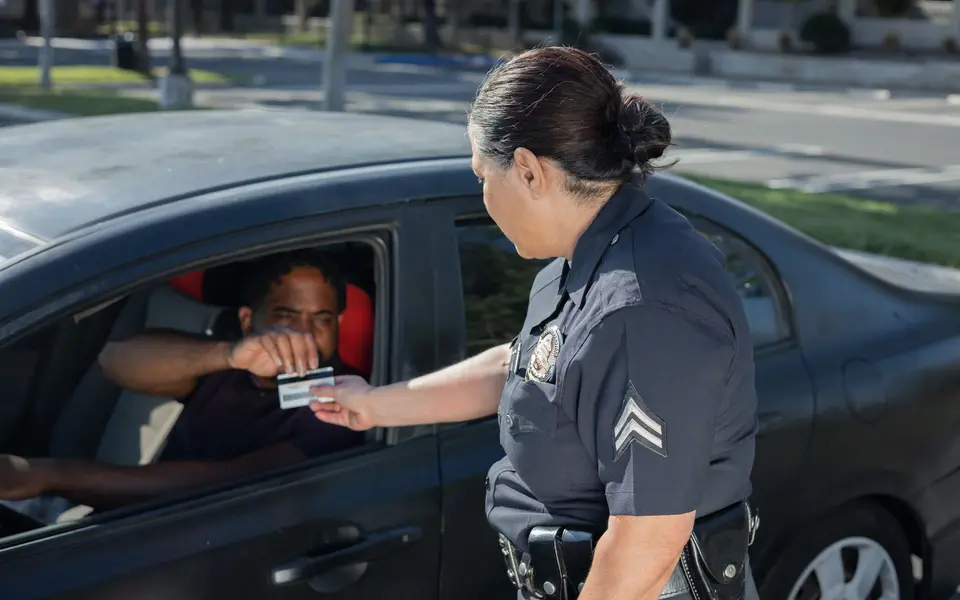
You also have to be able to show it. On request, you must give proof to a peace officer or to anyone involved in a collision with you. The law accepts an insurance card or policy, a binder, and an image of your insurance information on a phone, among other documents. The statute adds that showing your phone does not give the officer consent to look at anything else on it.
What is the penalty for a first offense?
Under Section 601.191, driving without the required coverage is a misdemeanor punishable by a fine of not less than $175 and not more than $350.
There is one softening provision. If you have no prior conviction and the court finds you are economically unable to pay, it may reduce the fine to less than $175.
Three things a first ticket does beyond the fine:
- It counts as a prior. The next conviction is sentenced under the tougher rules below.
- It comes with a printed warning. By law the citation must state, in larger type than the rest, that a second or later conviction will result in suspension of your license unless you file and maintain proof of insurance for two years.
- It does not insure you. Paying the ticket changes nothing about your exposure the next time you drive.
What changes on a second offense?
A second conviction is where the consequences multiply. The fine goes up, and two more penalties are added that have nothing to do with the fine.
Texas penalties for driving without insurance
| Consequence | First conviction | Second or later conviction |
|---|---|---|
| Fine | $175 to $350 | $350 to $1,000 |
| Driver license | No suspension for the conviction alone | Suspended unless you file an SR-22 and maintain it for two years |
| Your vehicle | No impound for the conviction alone | Court must order it impounded for 180 days if you own it |
| Impound cost | None | $15 for each day |
| To get the vehicle back | Not applicable | Proof of insurance covering the next two years, plus the impound fee |
| DPS reinstatement fee | Not applicable | $100 if the license was suspended |
What this means for you: the first ticket is a warning with a price tag. The second one reaches your license and your car, and it puts you on a two-year filing requirement with the state.
The license suspension
Under Section 601.231, when you are convicted and a prior conviction has been reported, the Department of Public Safety (DPS) must suspend your license unless you file and maintain evidence of financial responsibility until the second anniversary of the later conviction. That evidence is the SR-22 certificate.
The same section lets DPS waive the requirement if you show that the vehicle was in fact insured at the time. For how the certificate works and how to keep it in force, read SR-22 insurance in Texas.
The impound
Section 601.261 says that on a second or later conviction, the court shall order the sheriff to impound the vehicle you were driving, if you owned it at the time of the offense and still own it on the date of conviction. The impound lasts 180 days, and the court must charge $15 for each day.
The court may not release the vehicle unless you apply and show proof of insurance for the two years after your application. The court may accept that proof in periods of at least six months at a time.
Can the police tell you are uninsured?
Often, yes, before you say a word. Texas runs an insurance verification program called TexasSure, created under Chapter 601 of the Transportation Code. It is a partnership of the Texas Department of Insurance, DPS, the Texas Department of Motor Vehicles and the Department of Information Resources.
Insurance companies report policies to the program. Law enforcement and vehicle registration offices use it to check whether a Texas-registered vehicle has coverage.
That has two practical effects:
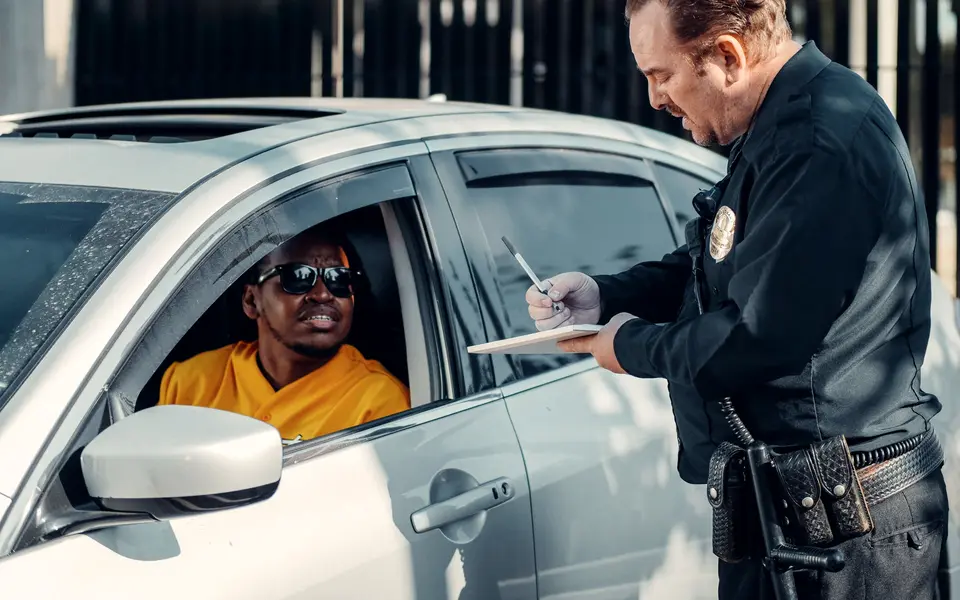
- At a traffic stop. If you cannot show proof, the officer checks the program. The law says an officer may not issue the citation unless the officer tried to verify coverage through the program and could not.
- At registration time. The Texas Department of Motor Vehicles says you need proof of current liability insurance to renew by mail or in person.
If you are insured, TexasSure's advice is to check that the vehicle identification number on your policy matches your car and your registration, and to tell your company if it does not. A mismatched number can make an insured car look uninsured. This comes up often after a move, which we cover in when and how to switch your car insurance after moving to Texas.
What if you had insurance but could not prove it?
This is a different situation from being uninsured, and the law treats it differently.
Section 601.193 makes it a defense to prosecution that you produce one of the accepted proof documents, valid at the time the offense is alleged to have occurred. After the court verifies the document, it must dismiss the charge.
If that is you, take these steps:
- Ask your agent or company for proof that shows the policy was in force on the date and time of the stop.
- Check that the document names the vehicle you were driving.
- Present it to the court listed on the citation by the date on the citation. Do not ignore the ticket.
- Keep a copy of the dismissal.
- Put a current card in the car and save a copy on your phone.
A policy that was canceled for nonpayment before the stop will not work here, even if you were sure it was still active. If you are not certain where your policy stands, read what happens if your car insurance lapses in Texas.
What happens if you cause a crash with no insurance?
This is the real cost of driving uninsured. Without liability coverage, the other person's repair bills, medical bills and lost income are yours to pay personally.
An at-fault crash with and without minimum liability coverage (example)
| With a 30/60/25 policy | With no insurance | |
|---|---|---|
| Other driver's car repair: $9,000 | Paid by your policy | You owe $9,000 |
| Other driver's medical bills: $6,000 | Paid by your policy | You owe $6,000 |
| Your out-of-pocket total | $0 for their losses | $15,000 |
| Your license | Not at risk for lack of insurance | DPS can suspend it |
What this means for you: one moderate crash on US-75 or I-35E can cost more than many years of liability premiums. The figures are an illustration with round numbers. A serious injury can run far higher, which is why we also explain how much car insurance you really need.
On top of the debt, DPS can suspend your license under the Texas Safety Responsibility Act when all of these are true: you were in a crash, the officer's report shows you were responsible, you had no insurance, and the crash caused injury, death or at least $1,000 in property damage.
DPS mails a notice. You have 20 days from the notice date to request a hearing. A late request is denied.
To get the license back you pay the $100 reinstatement fee and show DPS one of the following: a notarized release from the other party, an installment agreement to pay the damages, or a deposit along with an SR-22. If the other party wins a court judgment and it goes unpaid, your license and vehicle registrations can stay suspended until the judgment is dealt with. An attorney can advise you on a claim or a judgment against you.
The first hours after any crash matter, insured or not. Our guide on what to do after a car accident in Texas lists the steps. If you are on the other side, hit by someone with no coverage, see whether uninsured motorist coverage is worth it.
How much can a second offense really cost?
Here is a worked example with the amounts set by statute. It is an illustration, and a court decides the actual fine.
Chris is convicted of driving without insurance for the second time while driving his own pickup.
- Fine: between $350 and $1,000. Say the court sets $500.
- Impound: 180 days at $15 a day is $2,700.
- DPS reinstatement fee: $100.
That is $3,300, and the truck is gone for about six months. To get it back, and to keep his license, Chris must also buy the insurance he was trying to avoid and keep an SR-22 on file for two years. He ends up paying for the coverage anyway, plus the rest.
How do you get legal again?
If you are uninsured today, the order of steps matters more than the size of the policy.
- Stop driving the uninsured vehicle until coverage is in force.
- Get a liability quote today. A basic 30/60/25 policy satisfies the law, and you can add coverage later. Our auto insurance page explains the options.
- Say so if you need an SR-22. Tell the agent or company before you buy.
- No car of your own? Ask about non-owner car insurance.
- Turned down? The Texas Department of Insurance says that if two or more companies turn you down, an agent can get you a basic policy through the Texas Automobile Insurance Plan Association.
- Deal with open tickets and DPS notices. Check the DPS License Eligibility page for anything you owe, and respond to every court date.
- Set up automatic payments so a missed bill does not put you back at step one.
If the vehicle is used for work, such as deliveries or hauling tools to job sites, ask whether you need commercial insurance instead of a personal policy. And if a term on your new policy is unclear, the insurance glossary explains it.
How Assured Insurance Group helps
Assured Insurance Group helps drivers in Flower Mound, Plano, Garland and across Dallas–Fort Worth with auto insurance, along with home and personal, commercial and life insurance. If you are driving without coverage, or have a ticket or a DPS notice in hand, we will walk through your situation and your options with you. You can call, email info@assuredinsgroup.com, or visit our Garland office. To get covered, request a quote or call 214-222-5234.
Questions people ask next
Is driving without insurance a criminal offense in Texas?
Yes. Under Transportation Code Section 601.191, operating a motor vehicle without the required financial responsibility is a misdemeanor punishable by a fine. A first conviction is $175 to $350, and a conviction after a prior one is $350 to $1,000. The statute does not set jail time for this offense itself, but related offenses can carry it. Ask an attorney about your own case.
Can I just show proof of insurance later and get the ticket dismissed?
Only if the coverage was in force when you were stopped. Section 601.193 makes it a defense that you produce proof of financial responsibility that was valid at the time of the alleged offense, and the court must dismiss the charge after it verifies the document. A policy bought after the stop does not work as a defense to that ticket.
Does Texas still charge yearly surcharges for no insurance?
No. Older articles mention a yearly surcharge under the Driver Responsibility Program. The Texas Department of Public Safety says that program was repealed effective September 1, 2019, and no new surcharges have been assessed since. Fines, reinstatement fees and suspensions that are not part of that program still apply.
Can I register my car in Texas without insurance?
Not in the normal way. The Texas Department of Motor Vehicles says you need proof of current liability insurance to renew registration by mail or in person, and registration offices use the TexasSure database to check whether a vehicle has coverage. A vehicle that does not show as insured can hold up your renewal.
What if the car is not mine and the owner has no insurance?
You can still be ticketed. The law says a person may not operate a motor vehicle in Texas unless financial responsibility is established for that vehicle, so the driver is the one cited. Before you borrow a car, ask to see the insurance card and check that the policy does not exclude you by name.
What if an uninsured driver hits me?
Their penalties do not pay your bills. You can pursue the driver personally, and the Department of Public Safety can suspend the license of an at-fault uninsured driver, but collecting can be slow. Uninsured motorist coverage on your own policy is what pays for your injuries and car repairs in that situation, subject to your policy's terms.
Sources and further reading
- Texas Transportation Code, Chapter 601: Motor Vehicle Safety Responsibility Act
- Texas Department of Insurance: Texas auto insurance FAQ
- Texas Department of Public Safety: Crash suspension
- Texas Department of Motor Vehicles: Register your vehicle
- TexasSure: Vehicle insurance verification
- Texas Department of Public Safety: Driver Responsibility Program repealed
General information for Texas readers, current as of September 2026. It is not legal, tax or insurance advice. Your coverage depends on the wording of your own policy.
More auto insurance guides
- Does Your Car Insurance Cover Someone Else Driving Your Car in Texas?
- Do You Need the Rental Car Company's Insurance If You Have Your Own Policy?
- Rideshare Insurance in Texas: What Uber and Lyft Drivers Need to Know
- Your Car Was Totaled in Texas: How the Insurance Company Decides What to Pay
- Does Your Credit Score Affect Car Insurance in Texas?
- Moving to Texas: When and How to Switch Your Car Insurance